

Haldi Ceremony Guide: Rituals, Meaning & How to Plan It
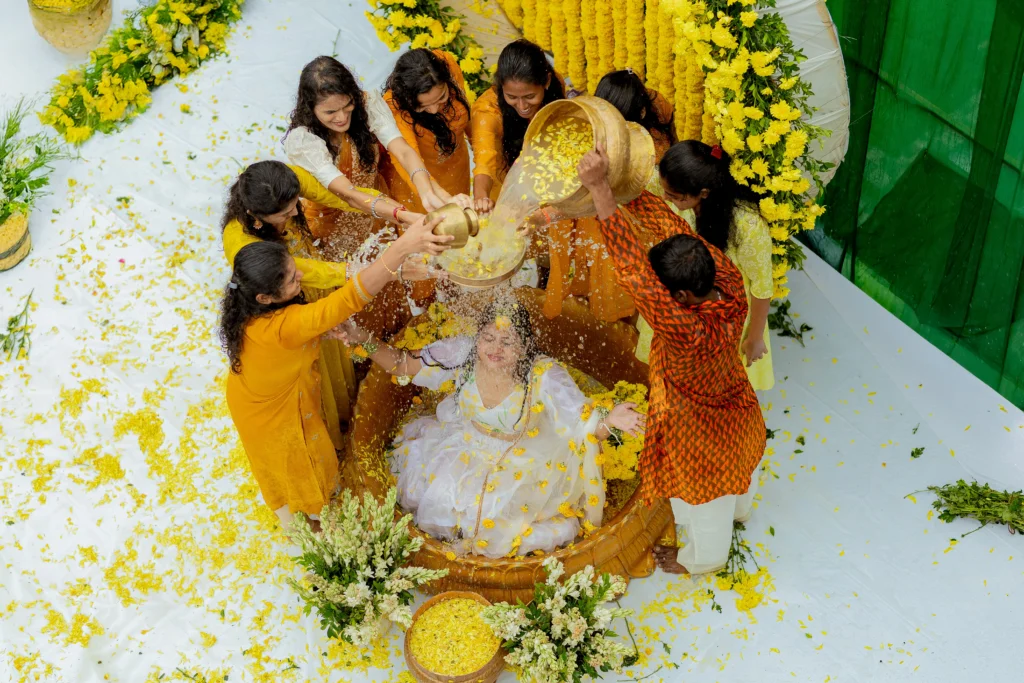
Most people who have grown up around South Indian weddings can tell you what a haldi ceremony looks like before they can tell you what it means. Turmeric paste, a stool in the middle of the courtyard, someone’s grandmother getting first turn, and by the end nobody’s clothes look the way they started. This guide covers the actual meaning behind the haldi ceremony, how it’s done across South Indian households specifically, and a straightforward plan for pulling one together.
What Is a Haldi Ceremony?
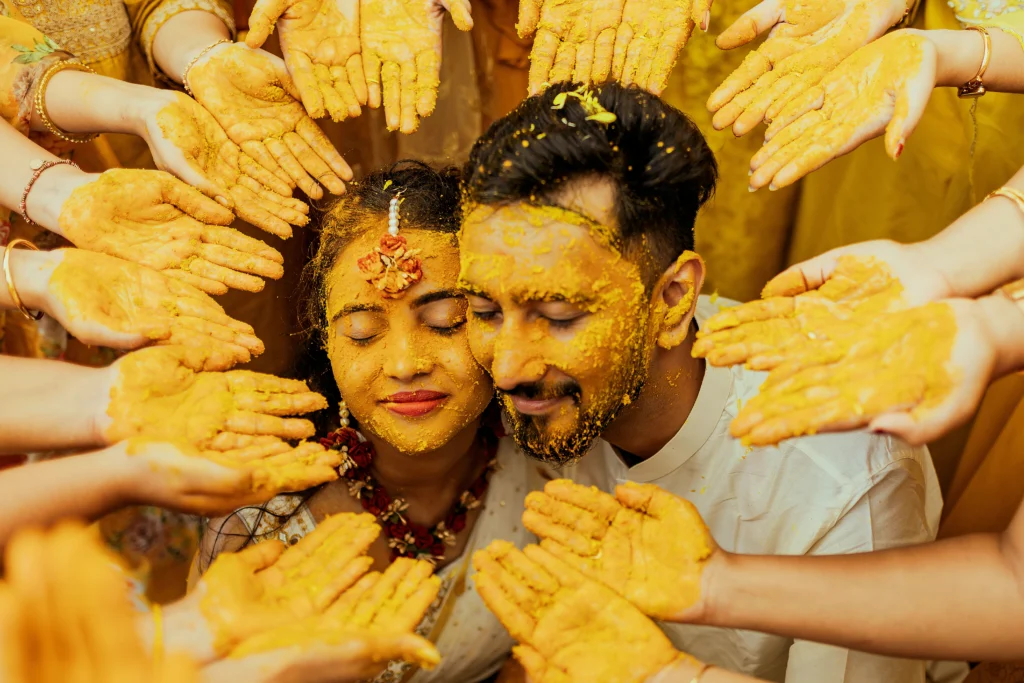
A haldi ceremony is one of the pre-wedding functions held in the days leading up to the wedding, where turmeric paste gets applied to the bride and groom by family and close friends. It is usually done separately at each partner’s home, though plenty of families now combine it into a single shared event to keep the wedding week a little shorter.
Compared to the wedding itself, haldi is easy going. There is no formal seating, no strict schedule to follow — just family sitting close together, a bowl of turmeric paste getting passed around and a lot of good-natured teasing as everyone waits for their turn.
The Meaning & Significance of Haldi
Turmeric is not part of this ceremony by accident. In Ayurveda, it is valued for its antiseptic and skin-brightening properties, which is actually where the tradition gets its practical roots — the paste was meant to give the bride and groom a natural glow before their wedding day. There is a spiritual side to it too: turmeric is considered auspicious in Indian households, tied to purity and prosperity and the act of applying it is believed to protect the couple from the evil eye as they head into this new phase of life.
Haldi Rituals in South Indian Weddings
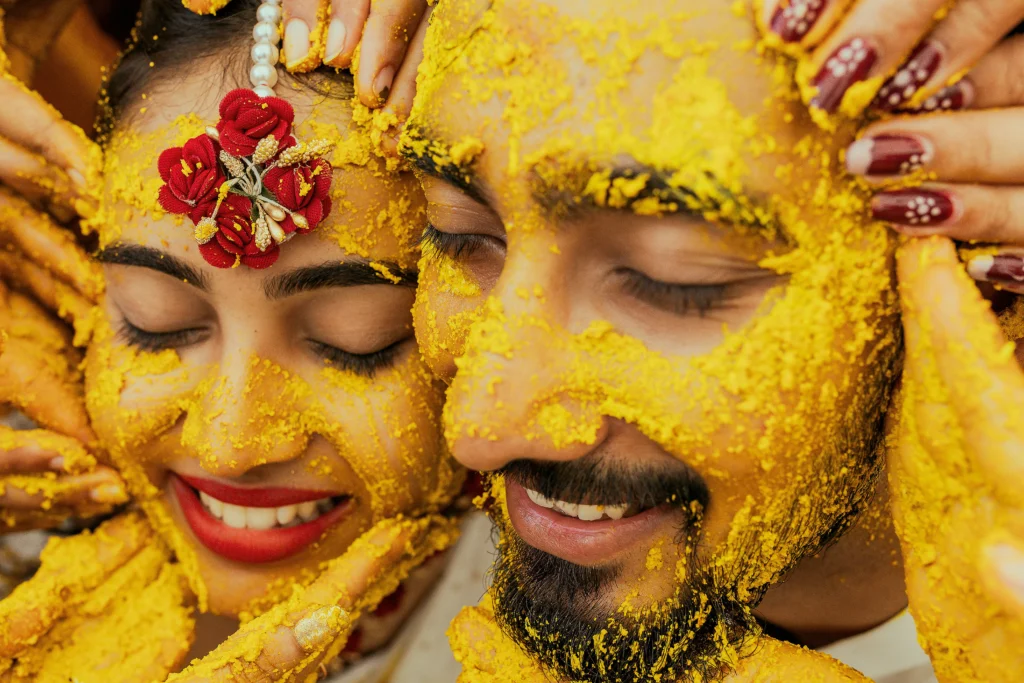
North Indian haldi tends to get most of the attention online, but the ritual looks quite different once you cross into Tamil Nadu, Andhra Pradesh, or Telangana. If you’ve grown up with these customs, the terminology alone can be confusing to explain to someone outside the community — so here’s how it actually breaks down.
Tamil Nalangu
In Tamil weddings, this function is usually called Nalangu rather than haldi, and it is often held on the evening of the wedding day itself, after the main Kalyanam ceremony rather than before it.
One detail that surprises people unfamiliar with the tradition: the bride and groom apply the turmeric paste to each other, turning it into a playful, almost teasing exchange rather than something done to them by family members. It is less about purification alone and more about breaking the ice between the newly married couple in front of both families.
Telugu Pellikuthuru & Pellikoduku
Telugu households split this into two separate functions with their own names like Pellikuthuru for the bride’s ceremony and Pellikoduku for the grooms, each held at their respective homes. The paste itself is a mix of turmeric, sandalwood and rose water and the ritual is usually paired with an Aarti and blessings from married women in the family, which adds a more devotional tone compared to some other regional versions.
How This Differs from North Indian Haldi
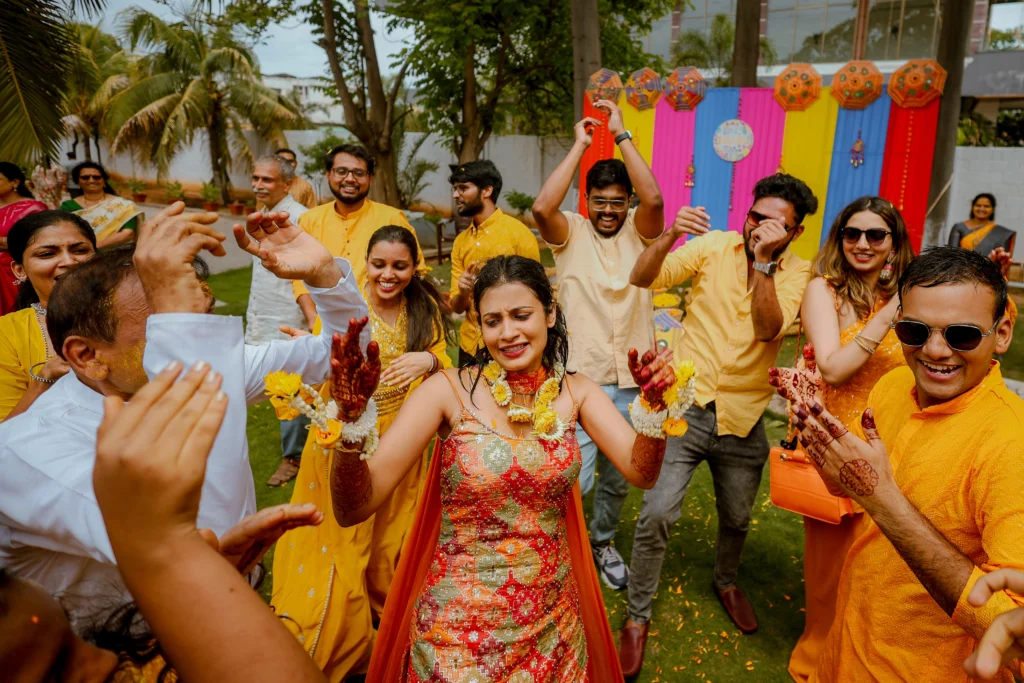
North Indian haldi (sometimes called Pithi) typically happens before the wedding, involves a wider mix of relatives applying paste in no particular order and often turns into a full mini-celebration with dhol players and dancing.
South Indian versions tend to be quieter and more ritual-focused and the timing itself is different — Tamil Nalangu, for instance, happens after the wedding ceremony rather than before it, which catches a lot of guests from other regions off guard the first time they attend one.
When Should You Hold the Haldi Ceremony?
Most families schedule haldi either the morning of the wedding or one to two days before it, usually around an auspicious time set by the priest. Morning wins out most often and not just for tradition — you need those few hours afterward to bath, dry off and get camera-ready for whatever comes next.
One thing we always tell couples: 9 to 11 AM is the sweet spot for light, not just timing. Push it too early and the yellows look muddy in photos. Push it past noon and the sun gets harsh enough to blow out the highlights on all that turmeric and marigold. If there’s any flexibility in your auspicious time, try to hold onto that two-hour window.
What You'll Need: A Simple Prep Checklist
You don’t need to overplan haldi, but a handful of things are worth sorting out a day or two ahead so the morning doesn’t be messy.
- Turmeric paste ingredients — turmeric powder, sandalwood, rose water, and whatever else your family’s recipe calls for. Mix a bit more than you think you’ll need; it always runs out faster than expected.
- A low stool or seat for the bride and groom, decorated simply with flowers if you want it to double as a nice photo backdrop.
- Marigolds and loose flowers for garlands, a backdrop, or a flower shower at the end.
- Old towels and a bucket of water near the seating area for the wash-off afterward.
- A tarp or old sheet under and around the seating — turmeric stains stick to flooring and furniture more than people expect.
- Outfits you don’t mind staining for the bride, groom, and anyone planning to get pulled into the mess.
- A quick word with your photographer about timing and light, especially if your auspicious window falls outside that 9–11 AM range.
Haldi Decoration Ideas
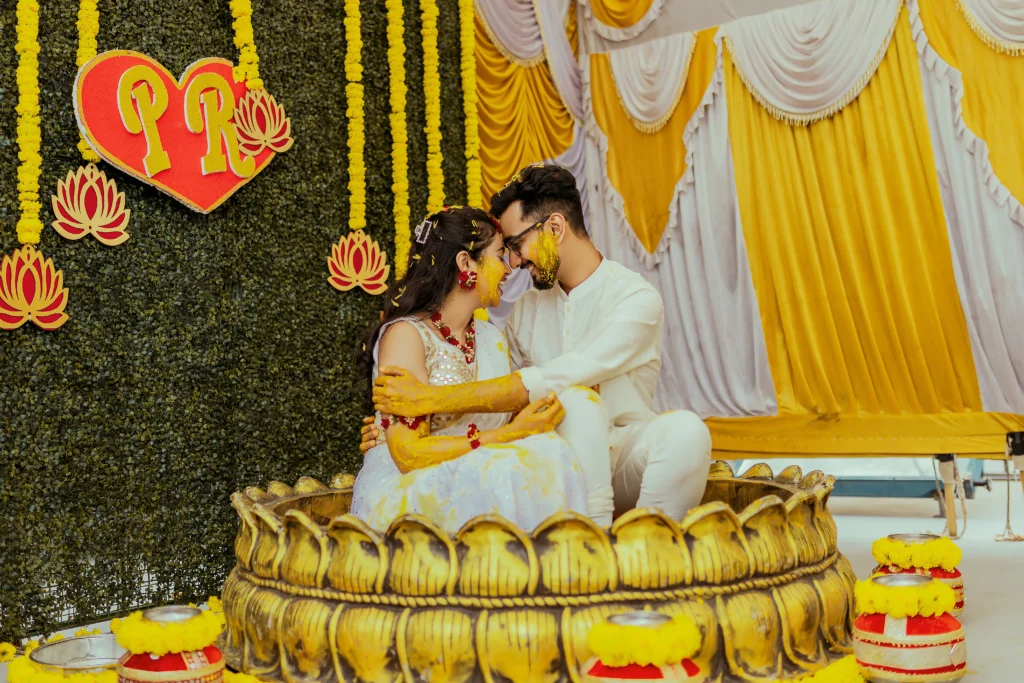
You don’t need much to make a haldi setup feel festive. Marigold strings across the space, yellow and white drapes, and floor seating with a few cushions cover most of what you need for a home setup. A lot of families add a simple flower backdrop behind the seating too, since that’s usually where the best photos end up happening.
If you want more setup ideas, for both a smaller home haldi and a bigger venue-style one — we have put together a full breakdown in our Haldi Decoration Ideas guide.
What to Wear for Haldi
Yellow is the traditional choice, mostly because it plays well against the turmeric itself and photographs beautifully against all that green and gold. But it is not the only option, a lot of brides and grooms now go with mustard, coral or soft florals, especially if they want to stand out a bit in photos where everyone else is in yellow.
Whatever color you pick, comfort matters more here than in almost any other function. This is one day you genuinely don’t want to be worrying about staining your best silk — pick something you are fine parting with, or that can handle a proper wash after.
For a fuller breakdown of outfit ideas including what’s worked well for real couples we have shot — check out our Haldi Outfit Ideas guide.
Photographing the Haldi Ceremony
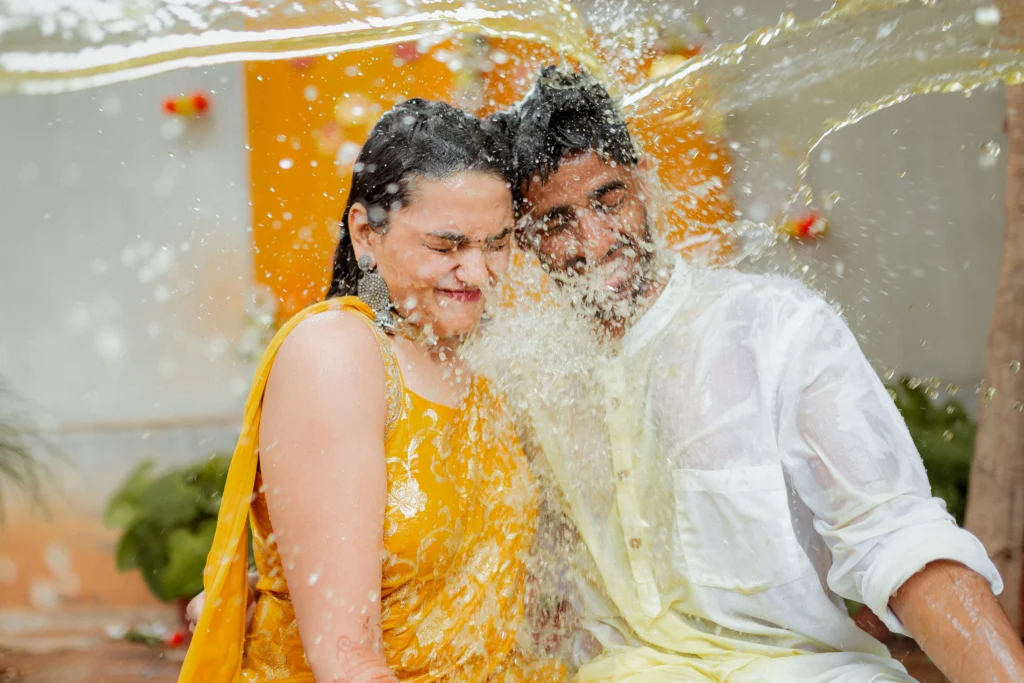
Haldi practically photographs itself. Turmeric handprints, someone catching a full handful of paste to the face, grandparents laughing from the sidelines — these unscripted moments usually end up being the most-loved shots in the whole album.
We watch closely for the first application, quick reaction shots and wide frames that catch the whole courtyard mid-celebration. The goal is staying close enough to catch it as it happens, without ever asking anyone to “do that again” because haldi loses something the second it feels staged.
Want to see how we have shot it for other couples? Check out our specific shot ideas in our Haldi Photography Poses guide.
Haldi vs Mehndi: What's the Difference?
These two get mixed up constantly since they both happen in the days before the wedding, but they are not the same thing. Haldi centers on the turmeric paste for purification and blessing. Mehndi is about the henna designs applied to the bride’s — and often the bridal party’s — hands and feet.
Some families combine both into a single day to keep the wedding week shorter. Others keep them as two separate functions entirely, sometimes days apart.
long with sangeet and other pre-wedding events, haldi and mehndi are usually squeezed into the same busy week — so it helps to plan the order early.
If you want the full comparison, including which one typically comes first, we have broken it down in our Haldi vs Mehndi guide.
Final Thoughts
Haldi doesn’t need much planning compared to the rest of the wedding week — a stool, some marigolds, a tarp on the floor, and family who show up ready to get a little messy. Most couples don’t remember the decor a year later. They remember who smeared the paste first, and who ended up covered head to toe by the end of it.