

Haldi vs Mehndi: What's the Difference?

If you have ever gotten haldi vs mehndi mixed up, you are not alone — they happen around the same time, involve a lot of the same people and both come with their own color and their own mess. But they are not the same ceremony, and they are not interchangeable. Here is what actually separates the two.
What Is Haldi?
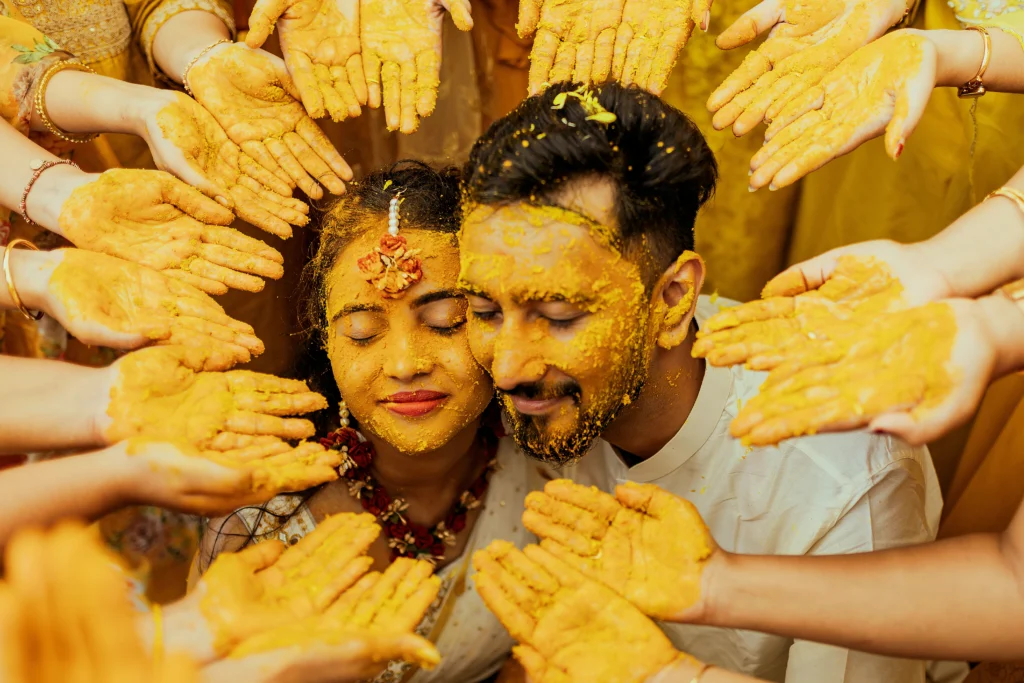
Haldi is the turmeric ceremony where family members apply a turmeric paste to the bride and groom, usually the day before or the morning of the wedding, as a form of blessing and purification. It is less about styling and more about the ritual itself, though it does come with its own color scheme and its own kind of chaos.
What Is Mehndi?
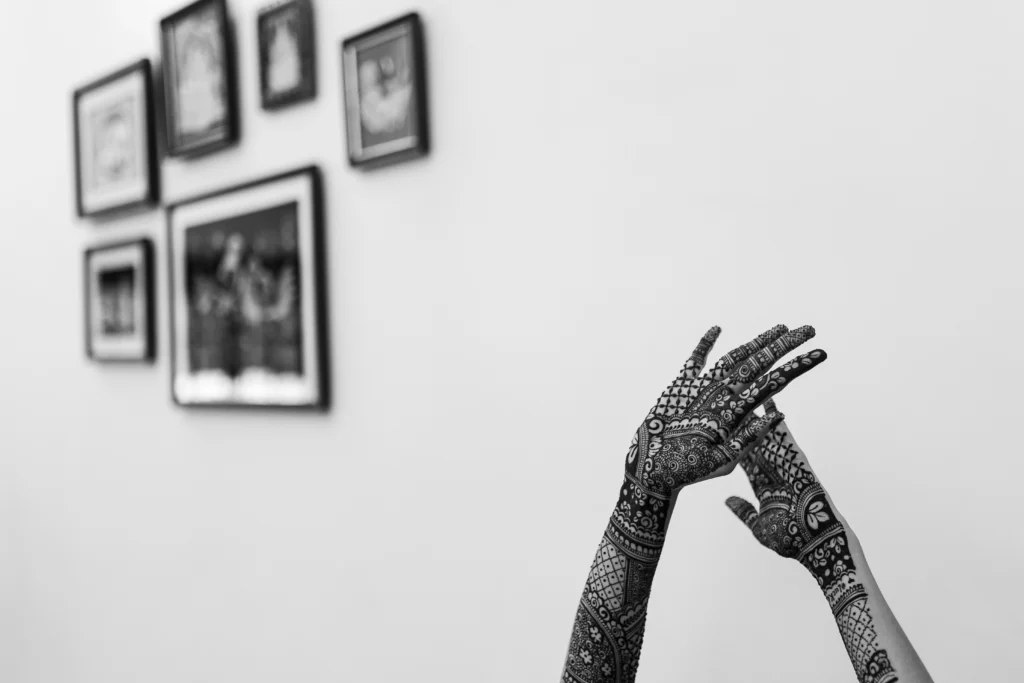
Mehndi is the henna ceremony where intricate designs are applied to the bride’s hands and feet and often to the hands of close family and friends too. It is usually held a day or two before the wedding, separate from haldi and tends to be a slower, more social event since henna application takes time to dry and set.
Where haldi is about ritual and blessing, mehndi leans more toward celebration and styling. Music, food and a lot of sitting around comparing designs are all part of the experience.
Haldi vs Mehndi: Key Differences at a Glance
The core difference comes down to what actually happens. Haldi is about turmeric paste applied to the bride and groom, meant as a blessing and a form of purification — it’s playful, a little messy, and usually wrapped up within an hour or two. Mehndi is about henna, applied mostly to the bride’s hands and feet (and often to family and friends too), and it runs longer simply because the designs take time to dry and set.
The mood shifts too. Haldi has an energy closer to organized chaos — people getting smeared with paste, a lot of movement, yellow everywhere. Mehndi is slower and more social, more sitting-and-talking than anything else, with green and gold showing up more than yellow. Haldi is mostly about the couple; mehndi tends to pull in a wider circle of friends and family since there’s more time and space for everyone to get their own henna done.
Which One Happens First?
This is where things get genuinely inconsistent, since it comes down to family and regional tradition rather than any fixed rule. In a lot of North Indian weddings, mehndi happens first — sometimes a full day or two before the wedding — followed by haldi closer to the wedding itself. In South Indian households, the order can flip or the two can end up much closer together in the same week.
If you are attending a wedding and unsure which one is happening when, the safest move is just checking the invitation rather than assuming based on what you have seen at other weddings. The order really does vary that much from family to family.
Can They Be Combined Into One Function?
Yes and plenty of families do exactly this, usually to keep the wedding week shorter or to make travel easier for guests coming from out of town. A combined haldi-mehndi typically starts with the henna application, since it needs time to dry and moves into the turmeric ritual later in the day once that’s done.
It is not the traditional approach, but it is an increasingly common one, especially for couples juggling a tighter timeline or trying to be considerate of guests who can’t take a full week off for the wedding. If you are considering it, just build in enough time between the two — going straight from wet mehndi into haldi’s mess isn’t ideal for anyone involved.
Final Thoughts
Haldi and mehndi get lumped together because they sit so close on the calendar, but they’re really doing two different jobs — one is a ritual, the other is a celebration that happens to involve a lot of henna. Once you see them that way, the confusion usually clears up fast.