

How to Plan a Destination Wedding Without Losing Your Mind

Ask any couple who has planned a destination wedding and they will tell you the same thing: the location was the easy decision. Everything after that — the legalities, the vendors who understand the destination, the guests who need real logistics support — is where the real planning happens.
This guide is built around that reality. Not the Pinterest board version of destination wedding planning, but the version that actually gets you to your wedding day without last-minute chaos.
What Is a Destination Wedding?
A destination wedding is a wedding held away from the couple’s hometown — usually somewhere chosen for what it offers, not how convenient it is. A private villa in Bali, a heritage property in Malaysia, a beachfront setting in Vietnam — the location isn’t just a backdrop, it is part of the decision itself.
What makes it different from a traditional wedding isn’t just distance. It is intentional. Couples choosing a destination wedding are usually choosing a smaller, handpicked guest list and a celebration that unfolds over days rather than one evening. For couples planning South Indian weddings especially, it also offers something harder to get at home: space to honour every ritual in full, without the scale of a five-hundred-guest hometown affair.
Is a Destination Wedding Right for You?
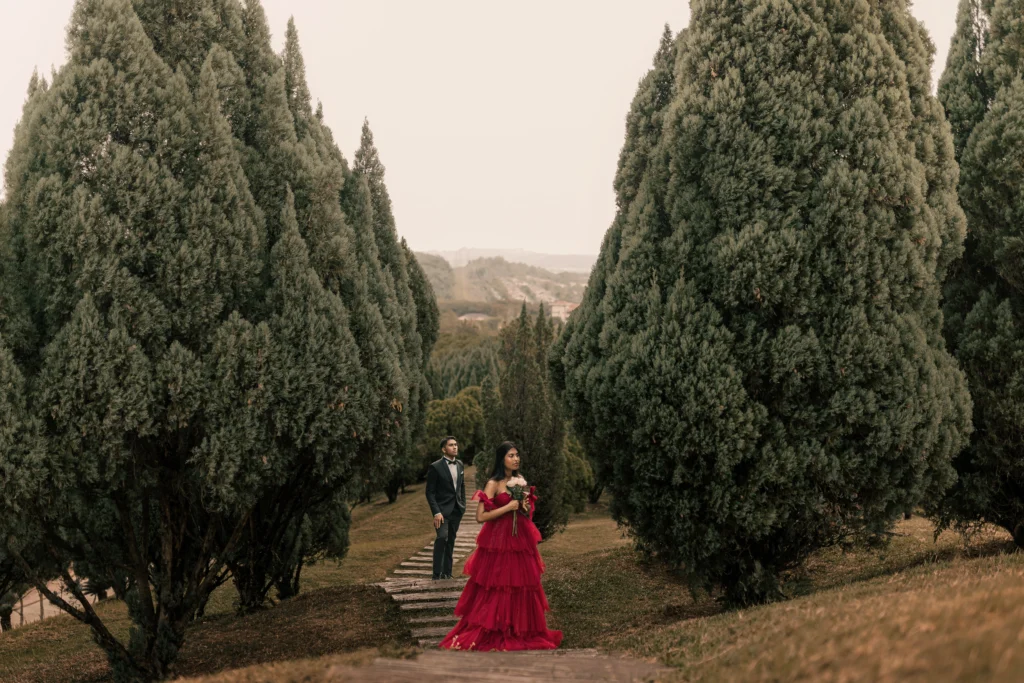
If your guest list keeps shrinking every time you think about who you actually want there — not who you are obligated to invite — that is usually the first sign. Destination weddings work because they force that clarity. You end up with the people who matter, in a place that means something, for longer than a single evening.
It is also for couples who don’t want the wedding to be over before it’s begun — the ones who’d rather spend three unhurried days with family and close friends than one packed night trying to greet everyone in the room.
If that is closer to the wedding you want, everything else in this guide is simply about making it happen.
How to Plan a Destination Wedding, Step by Step
Pick a Destination That Fits Your Vision (and Your Guests)
This is the decision everything else builds on, so it deserves more than a scroll through Pinterest. Think about the season and climate you are planning around, how easily your guests — especially elders — can actually get there and what the visa or entry process looks like for everyone involved, including your vendors.
Bali, Malaysia and Vietnam have become go-to choices for Indian couples for exactly this reason. They are visually stunning, reasonably accessible and increasingly set up to handle the scale and detail of a multi-day Indian wedding.
Sort Out Legal Requirements Early
This is the part couples put off longest — and the one that causes the most last-minute stress. Marriage laws differ from country to country and many couples end up holding the ceremony abroad while registering the marriage legally back home.
Start early. Check what documentation and translations the destination country requires, confirm whether a ceremony there actually carries legal marital status or needs separate registration and factor in any residency or processing timelines — some countries need weeks of paperwork before a wedding can even take place.
Build a Vendor Team You Can Trust Remotely
Your vendors become your eyes and hands on the ground, often before you have even landed at the destination — so this is a decision worth slowing down for. Look past the portfolio and ask about direct experience at your chosen location, not just general expertise.
Just as important: a team that understands the cultural weight of your rituals, not only how to style them for a shot. And whenever possible, ask to see their past work from your specific destination — it tells you far more than a proposal ever will.
Plan Guest Travel & Stay Without the Chaos
A destination wedding is as much about how your guests experience it as how you do. Send save-the-dates earlier than you would for a hometown wedding — six to nine months out gives people real time to plan around it. Block hotel rooms in advance so your group stays together and consider a simple welcome kit or itinerary so no one feels lost the moment they land.
Done well, this is the difference between guests who feel hosted and guests who feel like they are figuring it out on their own.
Create a Realistic Timeline
Working backwards from your wedding date keeps everything from piling up at the end.
- 12 months out — lock in your destination, venue, and core vendor team
- 6 to 9 months out — send save-the-dates, finalise legal documentation, confirm accommodation blocks
- 3 months out — finalise guest count, itinerary, and vendor logistics
- 1 month out — final walkthroughs and a detailed day-of schedule shared with every vendor
Choosing the Right Photography & Videography Team

Everything else from your wedding day fades a little with time — the flowers, the menu, even some of the conversations. What stays is what’s captured. That’s what makes this the one vendor decision worth being genuinely particular about.
Look for a team with real destination experience — shooting abroad comes with logistics that local weddings simply don’t have. Just as important is whether they understand your rituals, not just how to frame them. And the best sign of all is a style that feels timeless rather than trend-driven — something you will still love looking at twenty years from now. It is the kind of experience we’ve built at DSTUDIOS over years of photographing South Indian weddings across destinations like Bali, Malaysia, and Vietnam — knowing the rituals as well as we know the locations.
Mistakes That Cause Couples to Lose It While Planning
Most of the stress in destination wedding planning comes down to a handful of avoidable missteps:
- No backup plan for weather, permits, or last-minute venue changes
- Underestimating logistics — treating it like a slightly bigger hometown wedding instead of a different kind of event altogether
- Hiring vendors sight-unseen, without checking their actual destination experience
- Leaving legal paperwork until the final weeks, when timelines are tightest
- Over-inviting, then struggling to give every guest the intimate experience the destination promised in the first place
Almost all of these come down to one thing — starting early, and trusting a team enough to hand things over to them.
Final Thoughts
By the time the wedding day actually arrives, you won’t remember the visa paperwork or the vendor calls at odd hours. You’ll remember how it felt — the people who showed up for you, the place that held it all, and the version of your story you got to tell.
That’s really what destination wedding planning is in service of. Not the logistics themselves, but everything they make possible once they’re out of the way.